Reality on a Plate with Irina Pogonaru

reality on a plate is a new publishing feature series that, in response to member requests, allows individuals to dive deeper into the experiences of others before attending our events, fostering a sense of familiarity and connection.

Designer by instinct, entrepreneur by nature, and always drawn to beautiful things, Irina Pogonaru talks to us about The EDIT, takeout on proper plates, homes that echo the past and building what comes next.
tell us about your background — where you grew up, what food looked like in your home, and the memories that shaped who you are today
I grew up in Bucharest, just across the street from where The EDIT is today. Food at home was typical of the 90s: simple, tasty and fairly repetitive. Life was busy, so there wasn’t much time for elaborate cooking. Still, some tastes stayed with me: my mom’s tomato sauce, “liutica”, and my grandmother’s nettles.


With two entrepreneurs for parents, work talk was always part of dinner. I think that’s where my own drive to build something comes from. So it’s probably no coincidence that I started mine just a few steps from home.
if you could return to one table, who would be sitting around it
I’d go back to my year abroad in Buenos Aires, in my early twenties, and to the Romanian-themed dinner I hosted for my friends there. We listened to Maria Tănase and Suie Paparude, and I cooked a full traditional spread. It was truly memorable. What I miss most is the feeling of infinite potential that comes with being young. But as we all know, youth is wasted on the young, and back then I had no idea how rare that feeling was.
what’s your earliest memory of noticing design
Sometime in the 90s, my mom brought in a designer to redo our living room, and I remember her arriving with a huge moodboard. Not a digital one, a real one, with photos, sketches and notes pinned together. I can still picture it in detail. I also remember the designer herself: quiet, calm, with that very French way of being completely sure of what she was saying while gently steering the whole conversation.
if your childhood home and your home today could have a conversation, what do you think they’d say to each other
At first glance the two homes couldn’t be more different, but lately I keep noticing the echoes. Part of why we fell in love with our current place is the view: a museum with the same arched architecture as the house I grew up in. I think my childhood home would look at my current one the way a grandmother looks at her granddaughter showing off a “new” dress that once hung in her own wardrobe: fondly, and with a knowing smile. Everything is cyclical, and most of the things I love today were in fashion long before I found them.
what does your morning routine look like
Mornings are for cuddles with my two little ones and making them breakfast.
Then I rush off to the gym.
what do you serve when you have people over
Honestly, lately it’s mostly takeout — on proper plates, at least. But when I do cook, it’s usually scallops or duck.
when you set the table at home, what pieces always make an appearance — plates, cutlery, glassware, candlesticks, lamps
Always my Louise Roe stainless steel cups for dessert, plus a mix of serving plates by Georg Jensen, HAY, Dinosaur Designs and &Tradition.
you studied design in Milan and London.
what did living away from home change about your taste
What shaped me most was working at Natalia Miyar’s studio in London. I was very young and endlessly curious, soaking up everything: how she ran a meeting, how she spoke to clients, how she pulled a scheme together. I loved her no-nonsense attitude. She showed me what it looks like when a woman runs a creative business with both vision and authority. She also taught me that an idea isn’t worth much until you put it into practice. And her eye for mixing patterns and colour was unmatched. I still think of her sometimes when I’m choosing what makes it into The EDIT.
you and Magda, the other half of The EDIT, first met when she asked you to design her home. years later, that relationship became The EDIT. when did you first realise you could actually build something together — take us back to that moment.
Magda asked me to design her home in Bucharest in 2012, and we clicked instantly. For years, our conversations kept circling back to beautiful objects. Then, seven years after we met, on a gloomy day in January, Magda approached me. I had been turning the idea of The EDIT over in my head for a while, endlessly perfecting it, and that day we decided to build it together. On April 2nd that same year, we launched The EDIT with just three brands.
Today there are more than fifty.

Her experience in corporate marketing, her knack for structure and her drive have shaped not just the business, but who I am today.


who says “yes” first — and who usually says “let’s think about it”
We’re lucky: we agree on 99% of things, not just aesthetically but in how we like to get things done, which saves us a lot of time. But I’m usually the one who falls in love first, while Magda is the one who says “let’s think about it”, then comes back with the numbers, and often with the same yes.
That’s our balance: I bring the instinct, she makes sure it can stand on its own feet.
The EDIT says every piece is “selected, never simply stocked.” after all these years, what still makes you and Magda stop and say: we need this
It comes down to the same three things: beautiful design, real craftsmanship, and the feeling that it will still look right in twenty years. It can be a big name or a small studio nobody has heard of yet. If we’d want to live with it ourselves, it earns its place.


Icoanei 20 has been home to The EDIT for years.
what kind of life do you imagine for it next
The EDIT has always been about objects, but Icoanei 20 is becoming more about people. We’ve just opened its doors for events, shoots, podcasts, brunches, breakfasts and workshops, and we started by celebrating five years of WHAT IF THINGS GO WELL there. We want it to be a place where you come for a coffee, a meeting or a gathering, or simply drop in.
At the same time, we’re building The EDIT Scânteia: a new 1,160 sqm showroom in Casa Presei Libere, in what used to be a printing house, opening soon. It gives the collection room to breathe, with new brands, new pieces and space for exhibitions. Two spaces with two different moods, built on one idea: these pieces deserve more than a showroom. They deserve to be lived with.
what’s something slightly questionable that you secretly love
I’m not very good at keeping what I love a secret. My team at The EDIT sees me swoon over all sorts of things, from the newest Space Copenhagen chandelier for &Tradition to the coolest pearl necklace by Completedworks.

The slightly questionable part is elsewhere: I’ve watched every true crime documentary ever made. But that’s a whole other story.
what does a perfect sunday look like with your family
A table with family or friends, and really good food. Everything else is a bonus.
what does your daughter, Caterina, think you actually do for a living — as Aron, your son, is only almost a year old
Cate visits The EDIT often, and I love telling her stories about what happens at work.
So I suspect she thinks I spend my days trying out beautiful sofas, picking colours and throwing parties. Which, to be fair, isn’t entirely wrong.
after two kids, work and everything in between,
what does a date night look like these days
We don’t really do date nights. We love double dates, and every now and then we find a random excuse to go somewhere, just the two of us.
But somehow, our best conversations still happen at home, once the kids are asleep.
what’s more difficult to curate: The EDIT or a family holiday
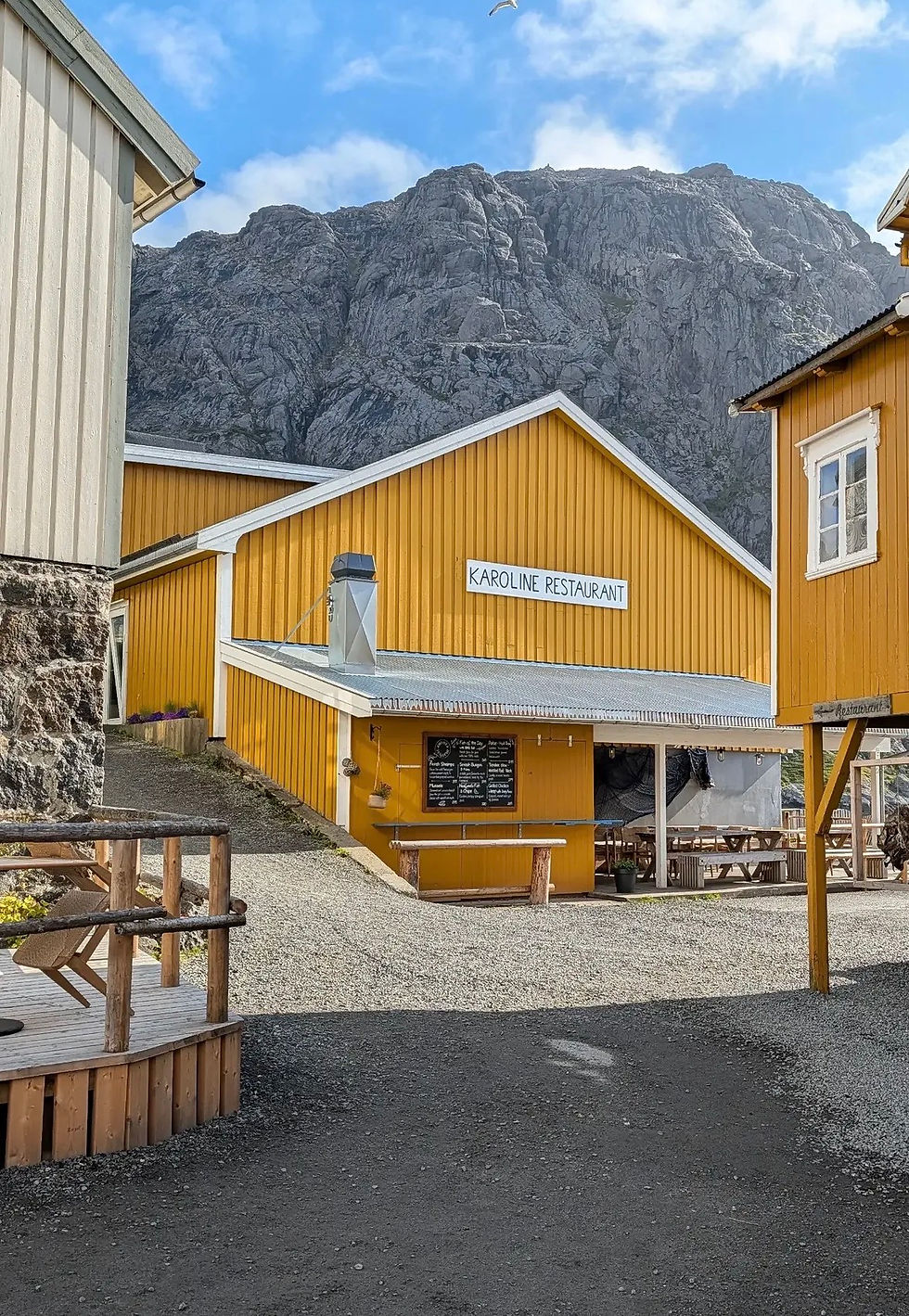
A family holiday, without question. This summer we did Norway, Oslo and then Lofoten, with an eight-year-old and a baby who wasn’t yet one. Wonderful, though we came home needing a little holiday of our own.

what in your life are you a beginner at these days
You’ve just made me realise it’s been a while since I was a beginner at anything, and I miss it. Maybe that’s what The EDIT Scânteia is really about: a space more than three times bigger than anything we’ve done before, in a building with so much history. It pushes us into new territory, at a completely different scale: new brands, pop-ups with designers we love, workshops, launches, exhibitions and gatherings that turn the showroom into a place people keep coming back to, and I’m loving that feeling of learning something new again.
describe your lock screen
Aron, Caterina and my niece Ania, in the coolest, most whimsical photo of the three of them, each one doing their own thing and being completely themselves, unaware of the camera, and of how much joy they bring.
what if things go well?
Then Scânteia opens full of people, Icoanei is alive with coffee and conversation, and Bucharest has a home for design that it didn’t have before. And we still look at a new piece and get as excited as we did the first time.
all images provided by Irina Pogonaru
cover Raluca Dutescu
editor Alinz


Comments